English
 Español
 русский
What a Low Pressure Oil Hose Is and Where It's Used
A low pressure oil hose is a flexible conduit designed to carry petroleum-based or synthetic oils at operating pressures typically below 300 psi (approximately 20 bar). It is used wherever oil needs to be routed between components without rigid pipe — most commonly in engine lubrication return lines, transmission oil cooler circuits, hydraulic tank drain lines, and fuel-adjacent oil systems in automotive, agricultural, and industrial equipment.
Unlike high pressure hydraulic hoses, which must withstand impulse pressures of 3,000–6,000 psi, low pressure oil hoses prioritize flexibility, oil resistance, and temperature tolerance over burst strength. Using the wrong hose — either overspecified or underspecified — leads to premature failure, oil leaks, or unnecessary cost. Understanding the correct specification is the foundation of a reliable installation.
How Low Pressure Oil Hoses Differ from High Pressure Hydraulic Hoses
The distinction matters because the two types are not interchangeable, even though they may look similar externally.
| Property | Low Pressure Oil Hose | High Pressure Hydraulic Hose |
|---|---|---|
| Working Pressure | Up to ~300 psi (20 bar) | 3,000–6,000+ psi (200–400+ bar) |
| Reinforcement | One textile braid or none | One to four wire braid/spiral layers |
| Wall Thickness | Thinner, more flexible | Thicker, stiffer |
| Bend Radius | Small (more flexible routing) | Larger (requires more space) |
| Typical Inner Material | NBR, EPDM, or silicone | NBR or PTFE lined |
| Cost | Lower | Significantly higher |
Installing a high pressure hose in a low pressure return line wastes money and reduces flexibility. Conversely, installing a low pressure hose in a high pressure circuit is a safety hazard — it can rupture without warning and cause fire, injury, or equipment damage.
Common Inner Tube Materials and Their Oil Compatibility
The inner tube material determines whether the hose will swell, harden, crack, or degrade when in contact with specific oils. This is the most critical material selection decision.
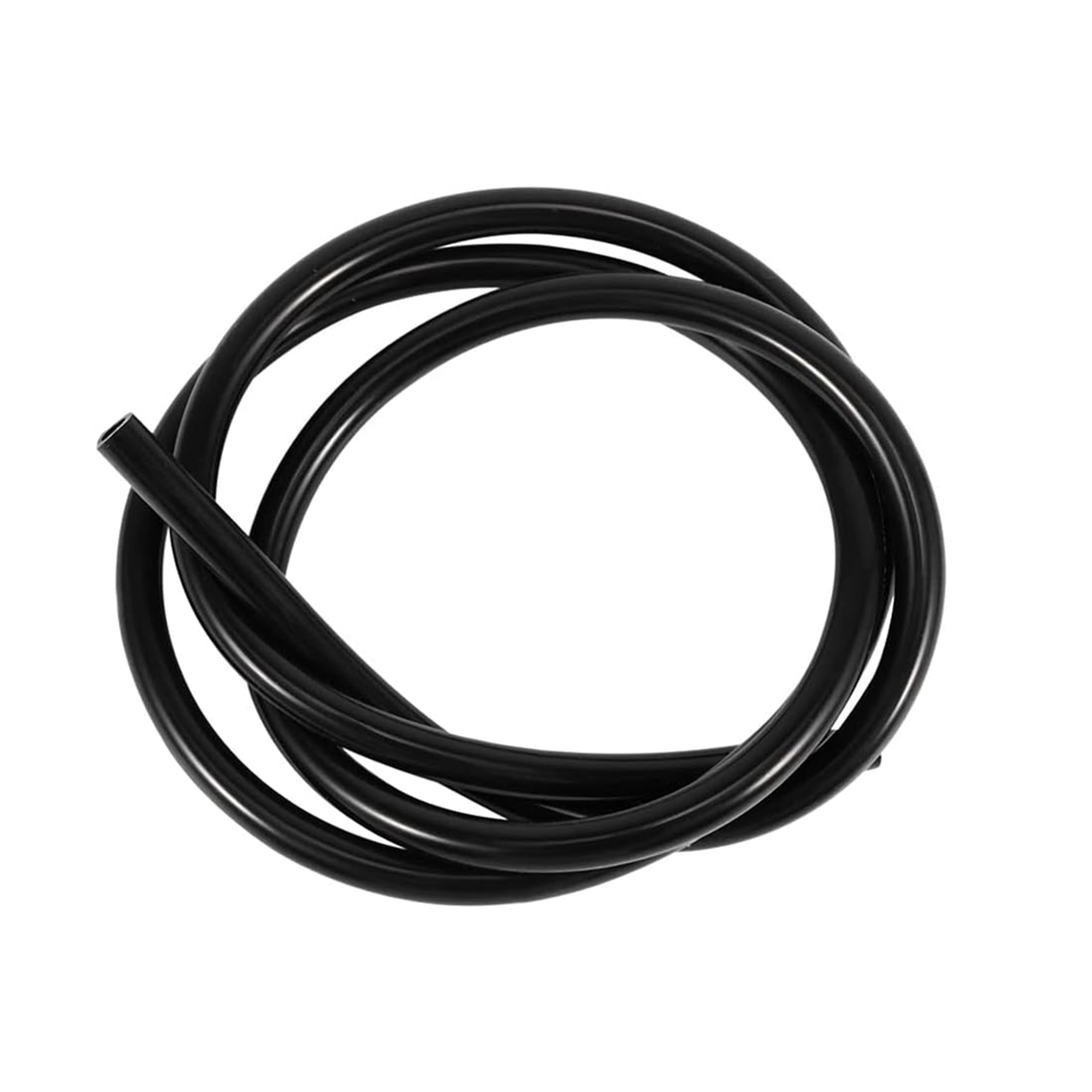
NBR (Nitrile Butadiene Rubber)
NBR is the most widely used material for petroleum-based oil hoses. It offers excellent resistance to mineral oils, hydraulic fluids, fuels, and greases. Typical temperature range is –40°C to +120°C (–40°F to +250°F). NBR is cost-effective and available in virtually all hose sizes. However, it is not compatible with phosphate ester fluids or most synthetic esters.
EPDM (Ethylene Propylene Diene Monomer)
EPDM is resistant to water, steam, and glycol-based coolants, but it is not suitable for petroleum-based oils. It will swell and degrade rapidly when exposed to mineral oil. EPDM oil hoses exist specifically for water-glycol hydraulic fluids or fire-resistant fluid applications, not for standard engine or transmission oil systems.
Neoprene (CR)
Neoprene provides moderate oil resistance and good weather, ozone, and flame resistance. It performs well in applications where the hose exterior is exposed to environmental degradation while carrying light oil. Operating temperature is typically –40°C to +100°C, making it slightly less heat-tolerant than NBR.
Silicone
Silicone handles extreme temperatures — up to +200°C (+390°F) — and is used in turbocharged engine oil drain applications or high-temperature return lines. Its oil resistance is moderate; it is better suited for oil mist and low-concentration oil vapor than continuous oil immersion. Silicone is also significantly more expensive than NBR.
Key Specifications to Check Before Purchasing
Every low pressure oil hose has a set of rated parameters that define its safe operating envelope. Matching these to your application prevents premature failure.
- Working pressure: The maximum continuous operating pressure the hose is rated for. Always select a hose with a working pressure rating at least 25% above your system's maximum operating pressure to allow a safety margin.
- Burst pressure: The pressure at which the hose will fail. SAE and ISO standards typically require burst pressure to be at least 4 times the working pressure. A hose rated at 150 psi working pressure should burst at no less than 600 psi.
- Temperature range: Both the minimum (cold start flexibility) and maximum (continuous operating heat) ratings matter. An oil return line routed near an exhaust manifold may see temperatures exceeding 130°C, which eliminates standard NBR and requires a silicone or high-temperature NBR compound.
- Inner diameter (ID): Directly affects flow rate and pressure drop. Undersizing the ID increases flow velocity, raises back pressure, and can starve downstream components. Always size based on the required flow rate, not just the port size of the fitting.
- Minimum bend radius: The tightest curve the hose can make without kinking or damaging the inner tube. Exceeding the minimum bend radius collapses the bore and restricts flow. This figure is listed in the hose datasheet and must be respected during installation routing.
- Vacuum rating: Relevant for suction lines. A hose not rated for vacuum service will collapse under negative pressure, blocking oil flow entirely. Suction hoses require a reinforced or spiral-wound construction to resist collapse.
Relevant Standards for Low Pressure Oil Hoses
Purchasing hoses that meet recognized standards ensures consistent quality and provides a baseline for safety and compatibility verification.
| Standard | Scope | Typical Application |
|---|---|---|
| SAE J30 | Fuel and oil hoses for automotive use; multiple classes by pressure and temperature | Engine oil return, fuel-adjacent oil lines |
| SAE J1019 | High-temperature performance for fuel and oil hoses up to 135°C | Turbo oil drain lines, hot zones |
| ISO 6945 | Rubber hoses for suction and return lines in hydraulic systems up to 50 bar | Hydraulic tank return and suction lines |
| EN 853 / SAE 100R1 | Single wire braid hydraulic hose; lower end covers low-pressure range | General oil lines requiring light reinforcement |
| DIN 73379 | Automotive rubber hoses for oil, including multi-layer constructions | OEM automotive oil system hoses |
For aftermarket replacements, matching or exceeding the standard of the original equipment hose is the minimum acceptable specification. Downgrading to a lower standard to reduce cost is a common cause of field failures.
Typical Applications and the Hose Type Each Requires
Different low pressure oil line positions in the same engine or hydraulic system can have significantly different requirements. Treating them all as identical leads to misapplication.
Engine Oil Return Lines
These carry oil from the cylinder head or turbocharger back to the sump under gravity or low pressure. Pressures rarely exceed 10–30 psi, but temperatures can be high. A SAE J30 R7 or R9 hose in NBR or fluorocarbon is typical, with the R9 specification offering superior oil resistance for modern low-viscosity synthetic oils.
Transmission Oil Cooler Lines
These operate at 60–150 psi and connect the transmission to an external cooler, often routed through or near the radiator. They require oil-resistant inner tubes and good heat resistance. Many OEM transmission cooler lines use nylon-reinforced NBR hose or steel-reinforced rubber to prevent collapse or abrasion failure where the hose contacts the vehicle chassis.
Hydraulic Tank Suction Lines
These connect the hydraulic reservoir to the pump inlet and operate under negative pressure (vacuum), not positive pressure. Standard oil hose will collapse on these lines. They require hoses rated for vacuum service — typically with a wire helix or rigid internal support structure, conforming to ISO 6945 or equivalent. A collapsed suction line starves the hydraulic pump and can cause catastrophic pump failure within seconds.
Hydraulic Return Lines to Tank
Return lines carry low pressure oil (typically below 100 psi) from actuators and valves back to the reservoir. ISO 6945 Type 1 or SAE 100R4 hoses are common choices. Flow velocity is more critical than pressure here: undersized return lines cause back pressure that affects downstream valve and actuator performance.
Installation Mistakes That Cause Early Failure
A correctly specified hose can still fail prematurely if installed incorrectly. These are the most common installation errors:
- Routing the hose in a tight bend below the minimum bend radius. This kinks the inner tube, creates a flow restriction, and generates a stress concentration point that cracks over time. Always allow a gentle curve with adequate slack.
- Allowing the hose to contact sharp edges or hot surfaces. Abrasion against chassis steel and heat from exhaust components are leading causes of hose outer cover degradation. Use protective sleeving or reroute to maintain clearance.
- Over-tightening hose clamps on soft rubber hose. Worm-drive clamps tightened beyond the hose's compression limit cut into the outer layer and damage the inner tube, creating a leak path. Torque clamps to manufacturer specification, not to feel.
- Installing a hose under axial tension. Hoses should have enough length to flex between connection points without being pulled straight. A hose installed under tension will pull fittings loose or fatigue-crack at the end fitting over time.
- Using incompatible fittings. Push-on fittings designed for one hose wall thickness will not seal correctly on a different wall thickness. Always verify fitting compatibility with the specific hose product, not just the inner diameter.
How to Inspect a Low Pressure Oil Hose for Replacement
Low pressure oil hoses degrade gradually and often give visible warning signs before they fail. Knowing what to look for allows planned replacement instead of emergency repairs.
- Surface cracking or crazing: Fine cracks across the outer cover indicate ozone degradation or age hardening. Once surface cracks appear, the hose is approaching end of life — the inner tube may not be far behind.
- Softness or swelling: A hose that feels unusually soft, spongy, or swollen has been chemically attacked by the fluid inside. This is common when the wrong inner tube material is in service. The hose will eventually balloon and burst at the weakest point.
- Hardness or brittleness: Hoses that crack when bent or feel stiff and glassy have heat-hardened. They will crack under vibration or thermal cycling. This is common in hoses routed near heat sources without adequate protection.
- Oil seeping at fittings: Weeping at the end fitting often indicates the hose has shrunk or the clamp has loosened. Re-tighten the clamp first; if the leak persists, the hose end has degraded and the hose must be replaced.
- Age: Even visually sound hoses should be replaced on a time-based schedule. Most manufacturers recommend replacing rubber oil hoses every 5–7 years regardless of appearance, as internal degradation can precede visible external signs.